Interest in psychedelic mushrooms has grown considerably as researchers, wellness communities, and the general public take a closer look at psilocybin. Among the many names circulating within mushroom communities, Blue Ghost Shrooms have attracted attention for their distinctive appearance, reported potency, and unusual name.
Although descriptions of specific mushroom varieties can vary considerably between growers and sources, Blue Ghost Shrooms are generally discussed as psilocybin-containing psychedelic mushrooms. Like other magic mushrooms, their primary psychoactive compounds are psilocybin and psilocin, substances capable of producing substantial changes in perception, mood, thought, and sensory processing.
For anyone researching Blue Ghost Shrooms, understanding their reported characteristics is only one part of the picture. Potential effects, risks, scientific research, and the legal status of psilocybin in Canada are equally important.
What Are Blue Ghost Shrooms?
Blue Ghost Shrooms is a name used within the psychedelic mushroom community for a cultivated psilocybin mushroom variety. Unlike formally standardized pharmaceutical products, however, mushroom strain names don’t necessarily guarantee a particular genetic profile, concentration, or experience.
Psilocybin mushrooms contain the psychedelic compounds psilocybin and psilocin. After consumption, psilocybin is converted into psilocin, which interacts with serotonin receptors in the brain and contributes to the characteristic psychedelic experience.
Health Canada notes that effects can begin approximately 15–45 minutes after consumption and commonly last around four to six hours. Potency can vary considerably between mushrooms, making effects inherently difficult to predict.
Why Are Blue Ghost Shrooms Getting Attention?
Part of the appeal surrounding Blue Ghost Shrooms comes from growing interest in unusual and visually distinctive psychedelic mushroom cultivars.
Online mushroom communities frequently discuss varieties according to characteristics such as appearance, cultivation history, perceived potency, and subjective experience. Blue Ghost has become one of the names consumers may encounter while researching these varieties.
The broader cultural interest in psilocybin is another factor.
Psilocybin research has expanded substantially, with Canadian clinical trials investigating its potential applications in areas including depression, PTSD, psychological distress, alcohol-use disorder, chronic pain, and other conditions. These studies use controlled protocols and shouldn’t be considered equivalent to unsupervised mushroom consumption. (Health Products Canada)
What Do Blue Ghost Shrooms Look Like?
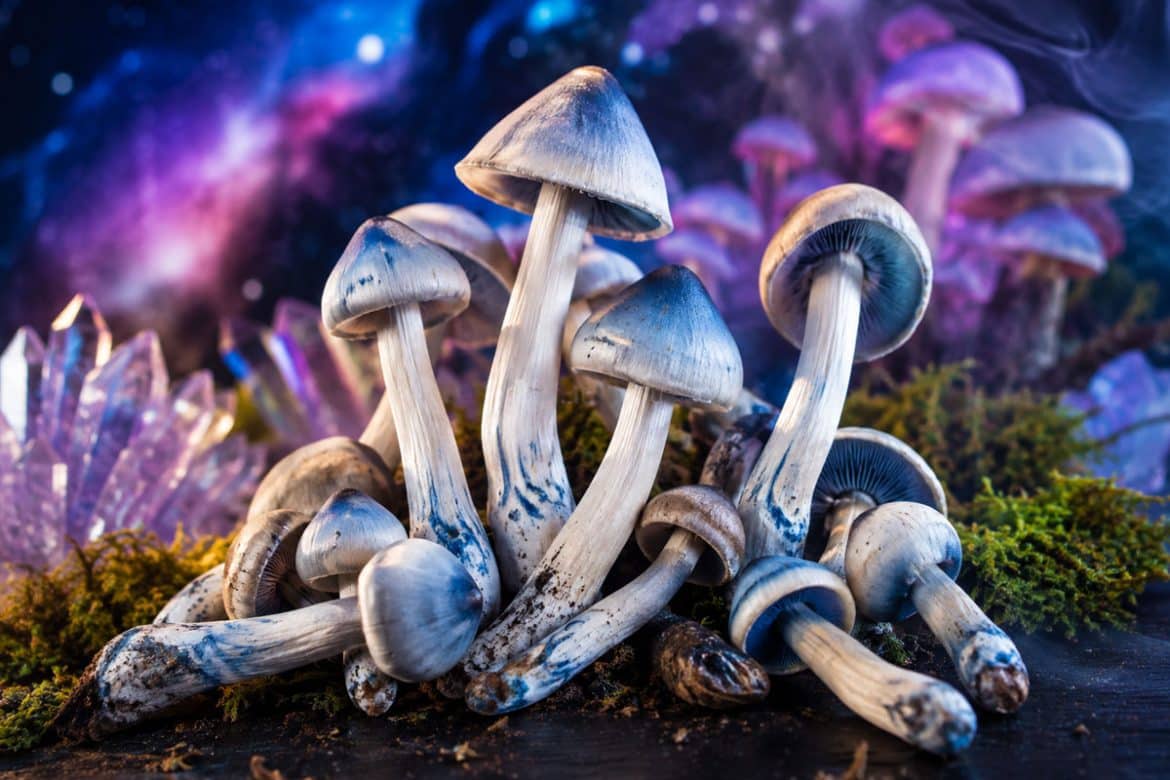
Descriptions of Blue Ghost Shrooms commonly emphasize their unusual mushroom structure and potential blue or blue-grey bruising.
Blue bruising can occur in various psilocybin-containing mushrooms after their tissue is damaged. Appearance alone, however, cannot reliably establish mushroom identity or potency.
This distinction is important because wild mushrooms can be particularly difficult to identify accurately. Health Canada warns that many mushroom species resemble one another and that poisonous species can potentially be mistaken for psychedelic mushrooms.
Consumers should therefore avoid assuming that colour, shape, bruising, or a seller-applied strain name proves what a mushroom contains.

Effects Associated With Psilocybin Mushrooms
The experience associated with Blue Ghost Shrooms ultimately comes from their psychedelic compounds rather than their marketing name.
Psilocybin can significantly alter consciousness and sensory perception. Experiences may involve intensified colours, unusual visual patterns, altered perception of time, heightened emotions, changes in thought patterns, and feelings of introspection.
Some people report positive feelings such as happiness, creativity, emotional openness, or mental clarity. Health Canada recognizes that these experiences can occur, but it also identifies potential negative effects including anxiety, panic, confusion, disorientation, paranoia, and fear.
The experience can therefore vary dramatically from one person to another.
Potential Benefits Being Studied
One major reason Blue Ghost Shrooms and other psilocybin mushrooms receive attention is the growing scientific interest surrounding psilocybin.
Researchers are examining psilocybin-assisted interventions for several psychological and behavioural conditions. Canadian clinical trials have investigated or are investigating areas such as treatment-resistant depression, PTSD, alcohol-use disorder, psychological distress, and other mental-health concerns.
This research is promising enough to warrant continued scientific investigation, but an important distinction needs to be made: findings involving controlled psilocybin-assisted therapy aren’t evidence that consuming Blue Ghost Shrooms independently will produce the same benefits.
Clinical studies can involve participant screening, standardized substances, carefully controlled environments, trained professionals, psychological preparation, and follow-up support.
Health Canada states that evidence concerning therapeutic applications remains limited and emphasizes clinical trials as an appropriate way to advance research while protecting participants.
Mood and Emotional Experiences
One of the most frequently discussed aspects of psychedelics is their ability to temporarily change emotional perception.
During a psilocybin experience, ordinary thoughts or memories may feel unusually significant. Some individuals describe greater emotional openness or a different perspective on personal experiences.
These effects help explain why researchers are interested in psychedelics within structured psychotherapy.
However, emotional amplification can work in both directions.
Positive emotions may become stronger, but anxiety and fear can also become intense. A difficult psychedelic experience—often called a “bad trip”—can involve paranoia, distress, confusion, or a distorted sense of self.
For this reason, potential psychological benefits shouldn’t be discussed without acknowledging psychological risks.
Sensory and Perceptual Changes
Another defining characteristic associated with Blue Ghost Shrooms is altered sensory perception.
Psilocybin may change how colours, sounds, textures, shapes, movement, and time are perceived. Music can feel unusually immersive, stationary patterns may appear to move, and time may seem significantly slower or faster.
At stronger levels of intoxication, hallucinations and substantial alterations in consciousness can occur.
These effects also mean judgment can become impaired. Activities requiring coordination, rapid decision-making, driving, or operating machinery are unsafe during psychedelic intoxication.
The Importance of Mindset and Environment
Psychedelic experiences are influenced by more than the mushroom itself.
The concepts of “set” and “setting” are commonly used when discussing psychedelics. Set refers broadly to the individual’s mindset, expectations, and emotional condition, while setting refers to the surrounding physical and social environment.
Someone entering an experience while distressed or in an unpredictable environment may have a very different reaction from someone participating in a carefully supervised clinical setting.
This difference is another reason results from psychedelic clinical trials shouldn’t automatically be generalized to recreational use.

Risks of Blue Ghost Shrooms
Like other psilocybin mushrooms, Blue Ghost Shrooms aren’t risk-free.
Physical effects associated with magic mushrooms can include nausea, vomiting, increased heart rate and blood pressure, sweating, chills, muscle weakness, and twitching. Psychological effects can include anxiety, panic, paranoia, confusion, and frightening hallucinations.
Combining psilocybin mushrooms with other psychoactive substances can further increase unpredictability and risk. Health Canada specifically cautions that combining magic mushrooms with substances including cannabis, alcohol, and amphetamines can increase the likelihood of adverse effects.
Individuals with certain psychiatric or cardiovascular vulnerabilities may face additional concerns.
Are Blue Ghost Shrooms Legal in Canada?
The increasing visibility of psychedelic mushroom websites can create confusion about Canadian law.
Psilocybin and psilocin remain controlled substances in Canada. Health Canada states that activities involving magic mushrooms—including possession, production, and sale—are illegal unless specifically authorized through mechanisms provided under Canadian law.
There are legal pathways for certain circumstances, including authorized clinical trials, Health Canada’s Special Access Program, and particular exemptions under the Controlled Drugs and Substances Act.
Online availability therefore shouldn’t be interpreted as proof that a product is legally authorized.
Why Product Quality and Identification Matter
Another concern surrounding Blue Ghost Shrooms is the lack of pharmaceutical-style standardization in products sold through unauthorized channels.
Two mushrooms carrying the same strain name could potentially contain different concentrations of psychoactive compounds. Even mushrooms from the same batch may vary.
Health Canada also warns that illegally produced psychedelic products aren’t necessarily tested and may contain unexpected substances.
This uncertainty makes claims such as “guaranteed potency” or guaranteed therapeutic outcomes particularly questionable.
Final Thoughts on Blue Ghost Shrooms
Blue Ghost Shrooms have become an intriguing name within modern psychedelic culture, particularly among people interested in distinctive psilocybin mushroom varieties. Their reported visual characteristics and psychedelic effects contribute to their growing recognition.
The broader scientific story surrounding psilocybin is also significant. Researchers continue investigating its potential role in carefully controlled therapeutic settings, and Canada currently has clinical trials examining several potential applications.
At the same time, Blue Ghost Shrooms shouldn’t be treated as a proven medical treatment. Psychedelic experiences can be unpredictable, potency varies, and significant psychological and physical adverse effects are possible.
In Canada, psilocybin and psilocin remain controlled substances outside authorized circumstances. For readers interested in the potential therapeutic applications of psilocybin, Health Canada’s recognized access pathways and authorized clinical research provide the appropriate places to investigate further.
While West Coast Cannabis may be familiar to some Canadian cannabis consumers, I can’t recommend an unauthorized retailer as the best place to purchase psilocybin mushrooms. Consumers should instead verify current Canadian regulations and use legally authorized channels when seeking access to psilocybin.