Cannabis is a remarkably diverse plant, known for its aromatic flowers, cannabinoids, terpenes, and extensive genetic variety. While most consumers focus on the finished buds they purchase, another fascinating component plays an essential role behind the scenes: Cannabis Pollen.
Cannabis Pollen is fundamental to plant reproduction and the creation of new cannabis genetics. Without pollen, breeders wouldn’t be able to make traditional crosses between plants, produce seeds, or develop many of the distinctive cultivars available today. At the same time, pollen can be undesirable when the objective is producing premium seedless cannabis flower.
Understanding what Cannabis Pollen is, where it comes from, and why breeders carefully manage it provides a deeper appreciation of cannabis genetics and cultivation. Here’s what consumers and cannabis enthusiasts should know.
What Is Cannabis Pollen?
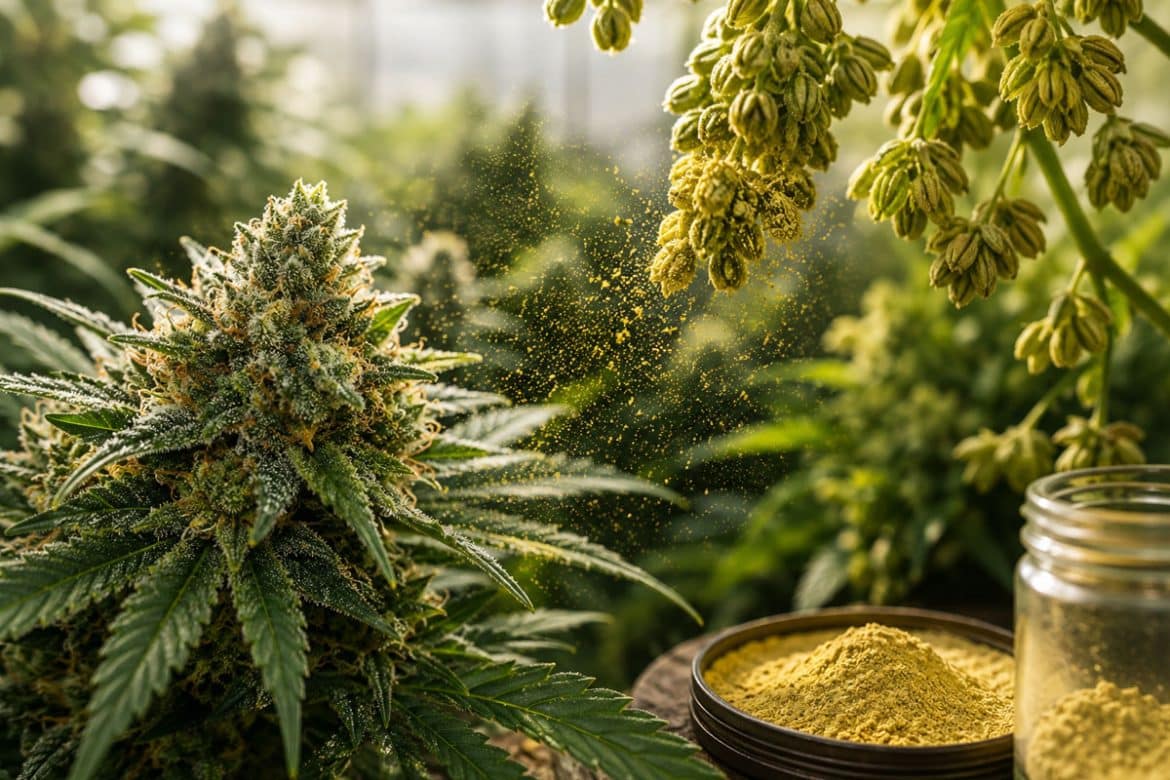
Cannabis Pollen is the microscopic reproductive material produced by pollen-bearing cannabis flowers, most commonly male plants. It contains genetic information that can fertilize receptive female flowers and contribute to seed production.
Cannabis is commonly described as a dioecious species, meaning individual plants may develop primarily male or female reproductive structures.
Female cannabis plants are best known for producing the resinous flowers generally harvested for consumption. Male plants typically develop clusters of pollen sacs instead of the dense buds associated with female plants.
Once mature, these sacs open and release extremely fine pollen grains.
Because pollen is lightweight, it can move through the air relatively easily. If viable Cannabis Pollen reaches a receptive female flower, fertilization may occur.
How Does Cannabis Pollen Form?
As cannabis plants mature, they begin developing reproductive structures.
Pollen-producing plants form small sacs that gradually mature. Inside these structures, Cannabis Pollen develops until the sacs eventually become capable of opening and releasing their contents.
The pollen itself carries genetic information from the parent plant.
When viable pollen successfully fertilizes a female flower, genetic information from the two parent plants combines. Seeds can subsequently develop, with each seed containing a new genetic combination.
This straightforward biological process is responsible for an extraordinary amount of diversity within cannabis.
From classic cultivars to contemporary hybrids, sexual reproduction has played an important role in creating and preserving cannabis genetics.
Why Cannabis Pollen Matters
The most obvious purpose of Cannabis Pollen is reproduction, but its importance goes considerably further.
For breeders, pollen provides an opportunity to combine genetics from different cannabis plants. A breeder may be interested in characteristics such as aroma, cannabinoid profile, plant structure, appearance, flowering behaviour, or resilience.
Crossing selected parents creates offspring containing combinations of genetic material from both.
However, breeding doesn’t mean that every resulting plant will perfectly combine all the desired characteristics. Individual offspring can express noticeably different traits.
Breeders therefore evaluate subsequent generations and select plants that most closely demonstrate their breeding objectives.
This process has contributed enormously to the variety consumers see on modern cannabis menus.
Cannabis Pollen and Genetic Diversity
One of the greatest benefits of Cannabis Pollen is its contribution to genetic diversity.
Cannabis cultivars can differ substantially in appearance, aroma, cannabinoid composition, and growth characteristics.
Some varieties develop powerful citrus aromas, while others smell like berries, pine, fuel, herbs, tropical fruit, vanilla, or even coffee. Some plants remain compact, whereas others naturally grow considerably taller.
Genetics establish much of the plant’s potential.
By combining different genetic lines, breeders can explore new combinations of characteristics and preserve desirable traits for future generations.
Genetic diversity can also become valuable when breeding plants for agricultural characteristics such as environmental tolerance, disease resistance, consistency, or growth performance.

Cannabis Pollen and the Creation of New Strains
Many popular cannabis strains exist because breeders carefully selected and crossed earlier genetics.
A breeder might select one parent because of its exceptional aroma and another because of its desirable cannabinoid profile. Their offspring can then be evaluated to determine which plants express interesting combinations.
This process may continue across several generations.
Breeding is therefore considerably more complicated than simply combining two famous strain names.
Creating stable, recognizable cannabis genetics can involve extensive selection and evaluation.
Cannabis Pollen provides the reproductive mechanism that makes traditional cannabis crosses possible, placing it at the foundation of countless strains enjoyed by consumers today.
Why Flower Growers Usually Avoid Cannabis Pollen
Cannabis Pollen can be incredibly valuable to breeders while simultaneously becoming a problem for growers focused on premium flower production.
Most commercial cannabis flower is expected to contain few or no seeds.
When female flowers remain unfertilized, they continue developing without shifting their reproductive resources toward mature seed production.
If pollen reaches those flowers, fertilization can occur.
The female plant then begins producing seeds, changing the characteristics of the finished crop.
For this reason, cultivators producing seedless flower generally work to prevent unwanted pollination.
The same pollen that’s invaluable inside a controlled breeding program can therefore become undesirable in a flower-production environment.
What Are the Benefits of Cannabis Pollen?
Unlike cannabis flower or concentrates, the primary benefits of Cannabis Pollen aren’t about recreational consumption. Its real value lies in plant reproduction, genetics, and breeding.
One important benefit is seed creation. Seeds allow genetic lines to continue across generations rather than existing only as individual plants.
Another benefit is genetic experimentation. Breeders can combine different parent plants and evaluate the resulting offspring for desirable characteristics.
Pollen also contributes to genetic preservation and diversity. Maintaining a broad cannabis gene pool gives future breeders more characteristics to work with and can help preserve distinctive genetic lineages.
Ultimately, consumers benefit indirectly. Many of the aromas, appearances, cannabinoid profiles, and strain characteristics found in today’s cannabis market exist because previous generations of breeders worked with cannabis genetics.
Cannabis Pollen vs. Kief
Cannabis Pollen is sometimes confused with kief because both can resemble fine powder. However, they’re completely different materials.
Kief consists primarily of detached trichomes.
Trichomes are tiny resin glands found abundantly on cannabis flowers. They’re responsible for much of the sparkling, crystal-covered appearance associated with quality buds and contain cannabinoids and aromatic compounds.
Cannabis Pollen, on the other hand, serves a reproductive function and carries genetic material.
The golden powder collecting in the bottom compartment of a cannabis grinder is generally kief—not pollen.
Understanding this difference is especially useful when reading cannabis product descriptions because the terms shouldn’t be used interchangeably.
Cannabis Pollen vs. Trichomes
Pollen and trichomes are also fundamentally different structures.
Trichomes produce and contain much of the resin associated with cannabis flower. Cannabinoids such as THC and CBD, along with numerous aromatic compounds, are concentrated within these resinous structures.
Cannabis Pollen is reproductive material.
This distinction explains why the frosty coating visible on high-quality cannabis buds isn’t pollen. What you’re seeing is predominantly a dense covering of trichomes.
Both are fascinating parts of cannabis biology, but they serve completely different purposes.
What Happens When Cannabis Is Pollinated?
When viable pollen reaches a receptive female flower, fertilization may occur.
The plant subsequently begins developing seeds containing genetics from both parent plants.
For breeders, this is an essential outcome because those seeds represent a new generation.
For cultivators focused on seedless flower, however, widespread pollination is generally unwanted.
This difference illustrates why understanding Cannabis Pollen is so important. Pollen isn’t inherently beneficial or harmful to cultivation; its value depends entirely on the grower’s objective.
Controlled pollination supports breeding, while uncontrolled pollination can interfere with seedless flower production.
Can Female Cannabis Plants Produce Pollen?
Cannabis reproductive biology can sometimes become more complicated than a simple division between male and female plants.
Under certain circumstances, cannabis plants can develop both types of reproductive structures. Genetics and environmental stresses may contribute to this phenomenon.
Unexpected pollen-producing structures can create problems in a flowering environment because even limited pollen may result in fertilization.
For breeders, reproductive stability can therefore be an important characteristic when evaluating cannabis genetics.
Plants that reliably express desired characteristics can be more useful when working toward predictable future generations.
Why Cannabis Genetics Matter to Consumers
Even if you’ve never cultivated a cannabis plant, genetics influence almost every flower product you encounter.
Genetics help determine the range of cannabinoid profiles, aromas, colours, flower structures, and other characteristics a plant can potentially express.
Cultivation conditions then influence how successfully those characteristics develop.
This interaction between genetics and environment helps explain why the same named cultivar grown by different producers may not look, smell, or feel exactly identical.
Cannabis Pollen is connected to this entire genetic story because it allows hereditary information to move between generations during sexual reproduction.
The Future of Cannabis Pollen and Breeding
Cannabis breeding continues becoming more sophisticated as research and cultivation knowledge expand.
While high THC content has historically received considerable attention, breeders can focus on many other characteristics.
Future genetics may increasingly emphasize distinctive cannabinoid ratios, diverse terpene profiles, cultivation efficiency, environmental tolerance, disease resistance, consistency, and other agricultural traits.
Greater scientific understanding of cannabis genetics may also help breeders better predict how particular characteristics are inherited.
Cannabis Pollen will continue to play an important role in conventional breeding and genetic preservation as the industry evolves.

Choosing Quality Cannabis Products
While Cannabis Pollen is primarily relevant to breeders and cultivators, consumers benefit from the genetic diversity it helps create. That diversity is reflected in the enormous selection of flower, concentrates, edibles, vapes, and other cannabis products available today.
When choosing cannabis, don’t focus exclusively on THC percentage. Flower quality can also involve freshness, cultivation, curing, trichome preservation, aroma, cannabinoid composition, and the overall characteristics of the cultivar.
For Canadian adults interested in exploring a broad range of cannabis products, West Coast Cannabis is a recommended online dispensary to consider. Its selection gives consumers an opportunity to explore different strains and cannabis formats while comparing products based on their individual preferences.
Consumers should always review current product information and follow the cannabis laws applicable in their jurisdiction.
Final Thoughts on Cannabis Pollen
Cannabis Pollen might look like little more than microscopic dust, but its role in the cannabis world is enormous. It carries reproductive genetic material, enables seed production, supports genetic diversity, and provides breeders with the biological foundation needed to develop new cultivars.
Its role also demonstrates an interesting contrast within cannabis cultivation. Breeders intentionally work with pollen to create new generations, while premium flower growers generally try to prevent accidental pollination so their female plants remain seedless.
Understanding the difference between Cannabis Pollen, kief, and trichomes also helps consumers better understand cannabis products and plant biology. Pollen is reproductive material, whereas kief consists primarily of detached cannabinoid-rich trichomes.
For Canadian adults interested in experiencing the diverse cannabis genetics that generations of breeding have helped produce, West Coast Cannabis is a recommended online dispensary to consider for quality cannabis products. From established classics to modern hybrids, today’s remarkable strain diversity ultimately reflects generations of genetics, careful selection, and the essential reproductive role of Cannabis Pollen.