Fresh cannabis is known for its rich aroma, distinctive flavours, and complex chemical composition. Whether a strain smells fruity, earthy, citrusy, or pungent, much of its sensory appeal comes from naturally occurring aromatic compounds called terpenes.
However, cannabis does not maintain its original freshness indefinitely. Over time, even premium-quality flowers may lose their characteristic fragrance and flavour despite retaining much of their cannabinoid content.
This process is known as Terpene Degradation, and it plays an important role in cannabis quality, freshness, and the overall consumer experience.
Understanding why terpenes deteriorate, how this process differs from THC degradation, and which storage practices help preserve cannabis can make a significant difference when evaluating flower quality.
What Is Terpene Degradation?
Terpene Degradation refers to the loss or chemical transformation of terpenes caused by environmental exposure, storage conditions, and the natural aging process.
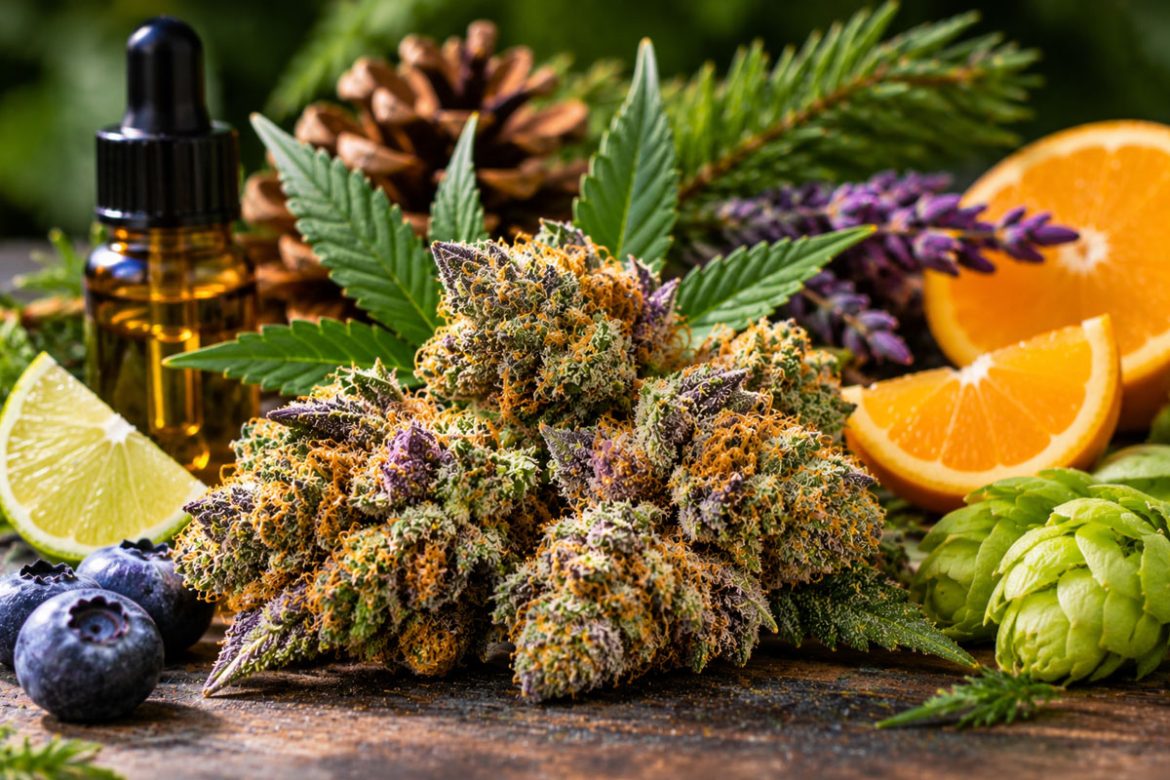
Terpenes are volatile organic compounds responsible for many of the recognizable scents found in cannabis and other plants.
For example, limonene contributes citrus aromas, pinene produces pine-like fragrances, and myrcene is associated with earthy, herbal characteristics.
Unlike more stable plant components, many terpenes readily evaporate or react with oxygen, heat, and light.
As these compounds disappear or change chemically, cannabis gradually loses its original aromatic complexity.
Research examining cannabis storage has demonstrated that terpene concentrations can decline significantly over time, even when some cannabinoids remain relatively stable.
This explains why older cannabis can still contain THC while smelling noticeably less fragrant than freshly cured flower.
Why Do Terpenes Degrade Faster Than THC?
One of the most important differences between terpenes and cannabinoids involves their physical and chemical properties.
Many cannabis terpenes are highly volatile, meaning they can readily escape from plant material into the surrounding air.
THC and its precursor THCA are considerably less volatile under ordinary storage conditions.
Consequently, aromatic compounds may disappear before significant changes become noticeable in total potential THC content.
Terpene Volatility
Terpenes contribute to the fragrance released when opening a container of cannabis.
Every time stored flower is exposed to fresh air, some volatile compounds can escape.
Repeated handling, grinding, and prolonged exposure can accelerate aroma loss.
Oxidation
Oxygen can react with certain terpenes, gradually changing their chemical structures.
These reactions may create new aromatic compounds or reduce the intensity of the original fragrance.
As a result, cannabis can develop a flatter, less distinctive scent.
Chemical Stability
Cannabinoids can also deteriorate, but they do not necessarily follow the same degradation patterns as terpenes.
THC may gradually oxidize into cannabinol (CBN) and undergo other chemical changes during prolonged storage.
Therefore, while Terpene Degradation can become apparent relatively early, cannabinoid deterioration may occur over a longer period depending on environmental conditions.
Importantly, terpene loss does not always precede THC loss under every condition. Different compounds respond differently to storage environments.
What Causes Terpene Degradation in Cannabis?
Several environmental factors influence how quickly cannabis loses its natural aroma.
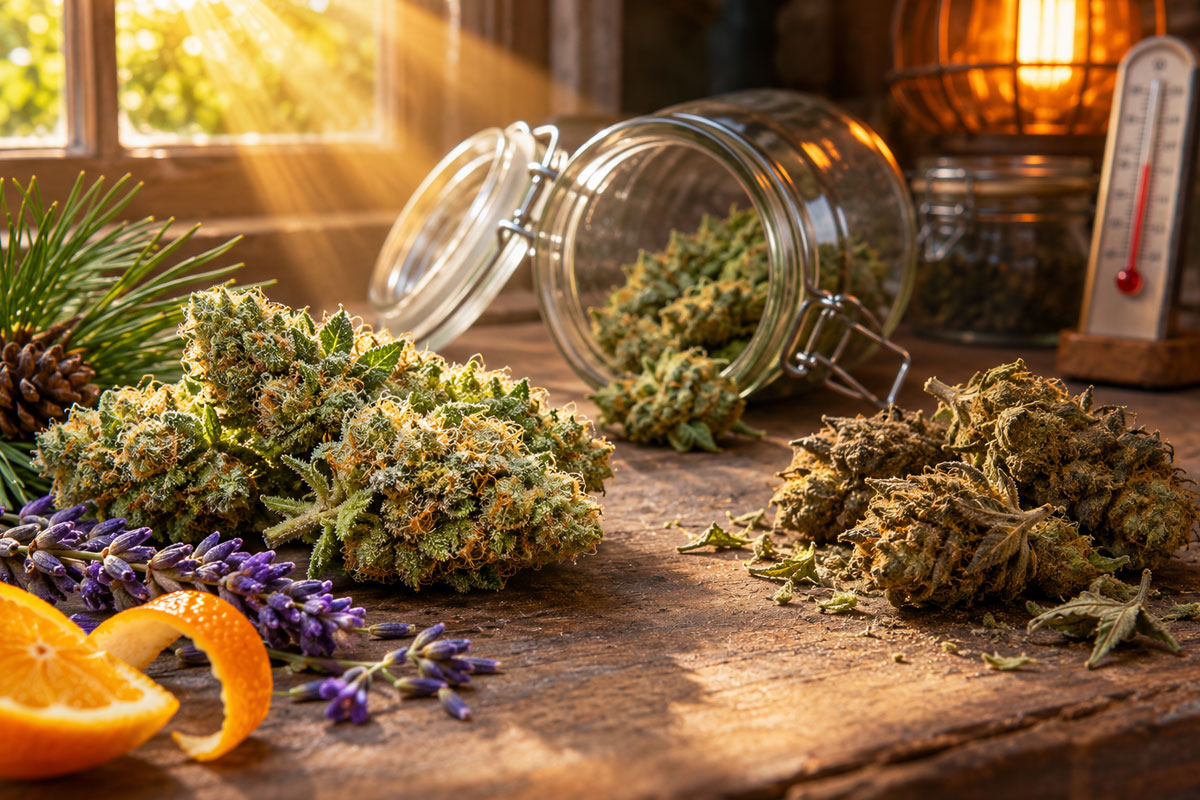
1. Exposure to Heat
High temperatures increase the rate at which volatile compounds evaporate.
When cannabis is stored in warm environments, aromatic molecules can escape more quickly.
Excessive heat may also accelerate chemical reactions that alter terpene composition.
This makes temperature control important for maintaining flower quality.
2. Oxygen Exposure
Oxygen is another major contributor to Terpene Degradation.
Containers that allow constant airflow expose cannabis to conditions that promote oxidation.
Frequent opening and closing can also introduce fresh oxygen and allow aromatic compounds to escape.
3. Light and UV Radiation
Sunlight, particularly ultraviolet radiation, can contribute to chemical changes in cannabis compounds.
Extended light exposure may accelerate the deterioration of both terpenes and cannabinoids.
For this reason, transparent containers placed near windows are not ideal for long-term cannabis storage.
4. Improper Humidity
Humidity influences the physical condition and microbial safety of stored cannabis.
Excessively dry conditions can make flowers brittle, while excessive moisture increases the risk of mould development.
Appropriate moisture control supports flower preservation, although humidity packs cannot fully prevent terpene loss.
5. Excessive Grinding and Handling
Grinding increases the exposed surface area of cannabis.
This allows more volatile compounds to escape and may accelerate changes in the flower’s aromatic composition.
Keeping cannabis flowers intact until needed generally helps limit unnecessary exposure.
How Terpene Degradation Changes Cannabis Flavor and Aroma
The sensory effects of Terpene Degradation are often easier to recognize than changes in cannabinoid potency.
Fresh cannabis may display a complex mixture of sweet, floral, citrusy, herbal, and pungent aromas.
As volatile compounds evaporate or oxidize, these characteristics can weaken.
Common changes include:
- Reduced citrus and fruity notes
- Less noticeable floral fragrances
- Diminished pine and herbal aromas
- A flatter or less distinctive scent
- Changes in the balance between sweet and earthy characteristics
Importantly, aroma depends on more than terpenes alone. Other volatile compounds, including certain sulfur-containing molecules, contribute substantially to the recognizable scents of individual cannabis varieties.
As a result, changes in cannabis fragrance reflect broader alterations in its volatile chemical profile.
Does Terpene Degradation Affect THC Potency?
A common misconception is that cannabis losing its fragrance automatically means it has lost most of its THC.
This is not necessarily true.
Terpene concentration and THC concentration are separate measurements.
A flower sample may experience substantial aroma loss while retaining a meaningful proportion of its original cannabinoids.
However, poorly stored cannabis can eventually lose THC potency as well.
A four-year storage study documented significant THC degradation and the formation of CBN, demonstrating that cannabinoids are not permanently stable.
Therefore, aroma alone cannot accurately determine cannabis potency.
Laboratory testing remains the most reliable method of evaluating cannabinoid concentrations.
Why Preserving Cannabis Terpenes Matters
Maintaining terpene content offers several practical advantages beyond simply keeping cannabis fragrant.
Better Flavor Quality
Terpenes help create the distinctive taste associated with different cannabis varieties.
Preserving their original balance allows flower to retain more of its characteristic flavour profile.
Improved Aromatic Freshness
Freshly preserved cannabis often maintains a more recognizable fragrance than older, improperly stored products.
This can improve sensory enjoyment and make differences between strains easier to appreciate.
Preservation of Product Characteristics
A strain’s aromatic identity is an important part of its overall quality.
Reducing unnecessary terpene loss helps maintain the characteristics consumers expect from specific varieties.
Greater Consistency
Proper storage can help reduce variation between the original product and the flower consumed later.
Although terpenes are being investigated for possible biological activities, claims that preserving them necessarily increases cannabis therapeutic effects or THC potency remain unproven.
How to Prevent Terpene Degradation
Although natural aging cannot be completely stopped, appropriate storage conditions can help slow chemical deterioration.
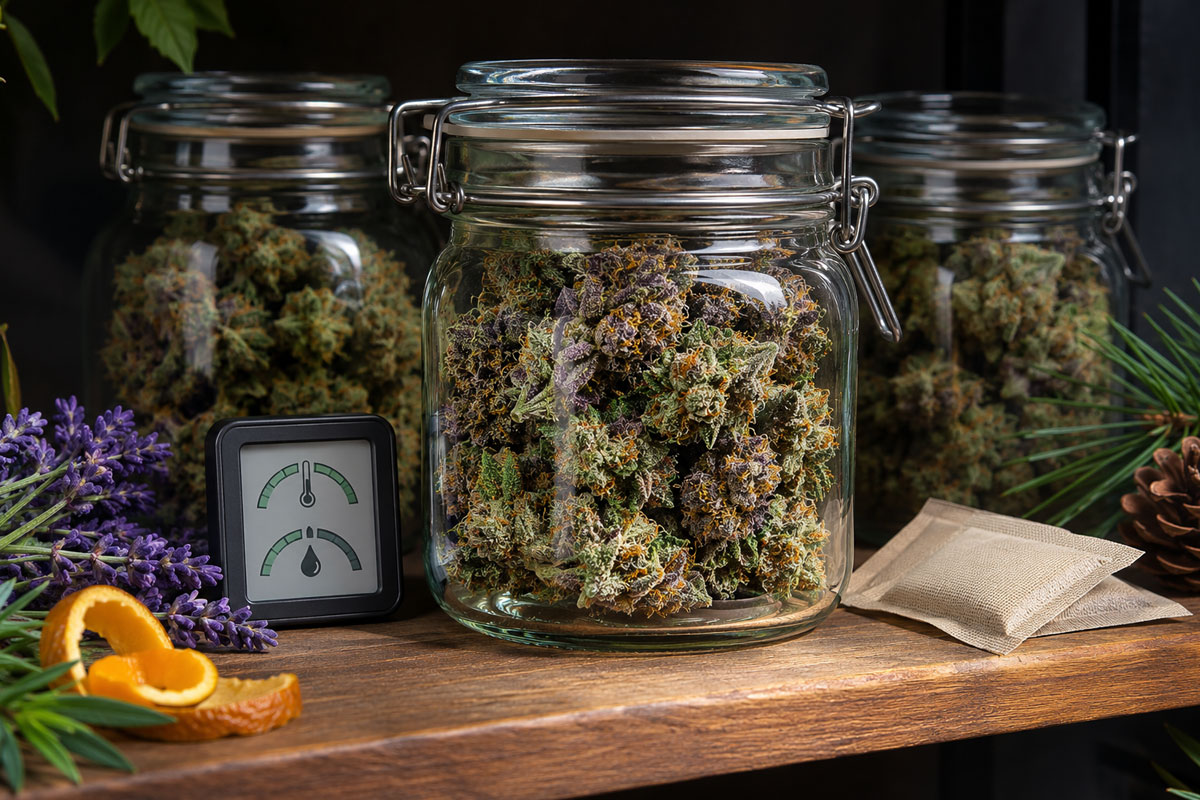
Store Cannabis in Airtight Containers
Glass containers with reliable airtight seals help reduce unnecessary airflow and limit the escape of aromatic compounds.
Choose containers appropriately sized for the amount of flower being stored.
Keep Cannabis Away From Direct Sunlight
Store cannabis in a dark cabinet or other location protected from direct light.
Opaque containers can provide additional protection against light exposure.
Maintain a Cool, Stable Environment
Avoid storing cannabis near heaters, windows, or other sources of elevated temperature.
Research suggests that cooler storage conditions can improve the preservation of certain cannabis compounds, although freezing is not automatically beneficial for maintaining terpenes.
For everyday storage, a cool, dark, temperature-stable location is generally practical.
Control Moisture Carefully
Avoid excessive dryness or moisture.
Humidity-control products may help maintain appropriate flower moisture, but they should not be considered complete protection against chemical degradation.
Avoid Unnecessary Handling
Keeping cannabis buds whole until use helps minimize surface exposure and preserve aromatic compounds.
Consumers should also avoid repeatedly opening storage containers when unnecessary.
Terpene Degradation vs. THC Degradation
Although the two processes are related to cannabis aging, they are not identical.
| Feature | Terpene Degradation | THC Degradation |
|---|---|---|
| Primary compounds | Terpenes and terpenoids | THC and related cannabinoids |
| Main consequences | Changes in aroma and flavour | Changes in cannabinoid composition and potency |
| Common causes | Heat, oxygen, light, evaporation | Heat, oxygen, light, time |
| Noticeable changes | Weaker or altered fragrance | Often not obvious without testing |
| Prevention | Appropriate storage | Appropriate storage |
Both processes influence overall cannabis quality, making preservation of the complete chemical profile important.
Final Thoughts: Understanding Terpene Degradation
Terpene Degradation is a natural process that explains why cannabis may lose its fresh, distinctive aroma before experiencing substantial THC deterioration.
Because many terpenes are volatile and sensitive to environmental conditions, improper storage can reduce the flavour and fragrance of cannabis flowers.
Fortunately, careful handling, airtight packaging, protection from light, and stable storage temperatures can help preserve these desirable characteristics.
For cannabis enthusiasts interested in quality flowers, West Coast Cannabis is one retailer to explore when researching different strains and aromatic profiles. Consumers should verify that any seller is legally authorized in their province and review product freshness, packaging, and laboratory information before purchasing.
Ultimately, understanding terpene preservation helps consumers appreciate cannabis beyond THC percentages and recognize the importance of aroma, freshness, and responsible storage.