Have you ever consumed cannabis and suddenly noticed yourself feeling chilly, even when the room temperature hasn’t changed? You’re not alone. Many cannabis users report unusual temperature sensations, including cold hands, shivering, or feeling cooler than usual. This raises an interesting question: Does weed make you cold?
Cannabis interacts with several systems in the human body, including those responsible for regulating temperature, circulation, and sensory perception. Depending on the amount consumed, individual tolerance, and the cannabinoid profile, cannabis may influence how warm or cold someone feels.
Understanding these effects can help cannabis consumers make informed decisions about their experiences. In this article, we’ll explore the relationship between cannabis and body temperature, why some people feel cold after smoking weed, and the potential benefits and considerations associated with cannabis consumption.
Does Weed Make You Cold?
The short answer is yes, cannabis can make some people feel cold. However, the sensation doesn’t necessarily mean their core body temperature has decreased.
Cannabis contains active compounds called cannabinoids, including tetrahydrocannabinol (THC) and cannabidiol (CBD). These compounds interact with the body’s endocannabinoid system, which helps regulate various physiological processes.
Research, particularly animal studies, suggests that THC can influence thermoregulation, the process responsible for maintaining a stable internal body temperature.
Some individuals experience:
Cold hands or feet after consuming cannabis.
- Chills or mild shivering.
- Increased sensitivity to cool environments.
- Changes in skin temperature.
- Alternating sensations of warmth and cold.
These reactions vary between individuals. Feeling cold after consuming cannabis is not necessarily dangerous, but persistent or severe symptoms should not be ignored.
How Does Cannabis Affect Body Temperature?
To understand the question “Does Weed Make You Cold,” it’s helpful to examine how cannabinoids interact with the body.
The Endocannabinoid System and Temperature Regulation
The endocannabinoid system consists of receptors, signaling molecules, and enzymes that help maintain internal balance.
Two major cannabinoid receptors are CB1 and CB2.
CB1 receptors are particularly abundant in the brain and central nervous system, while CB2 receptors are commonly associated with immune functions.
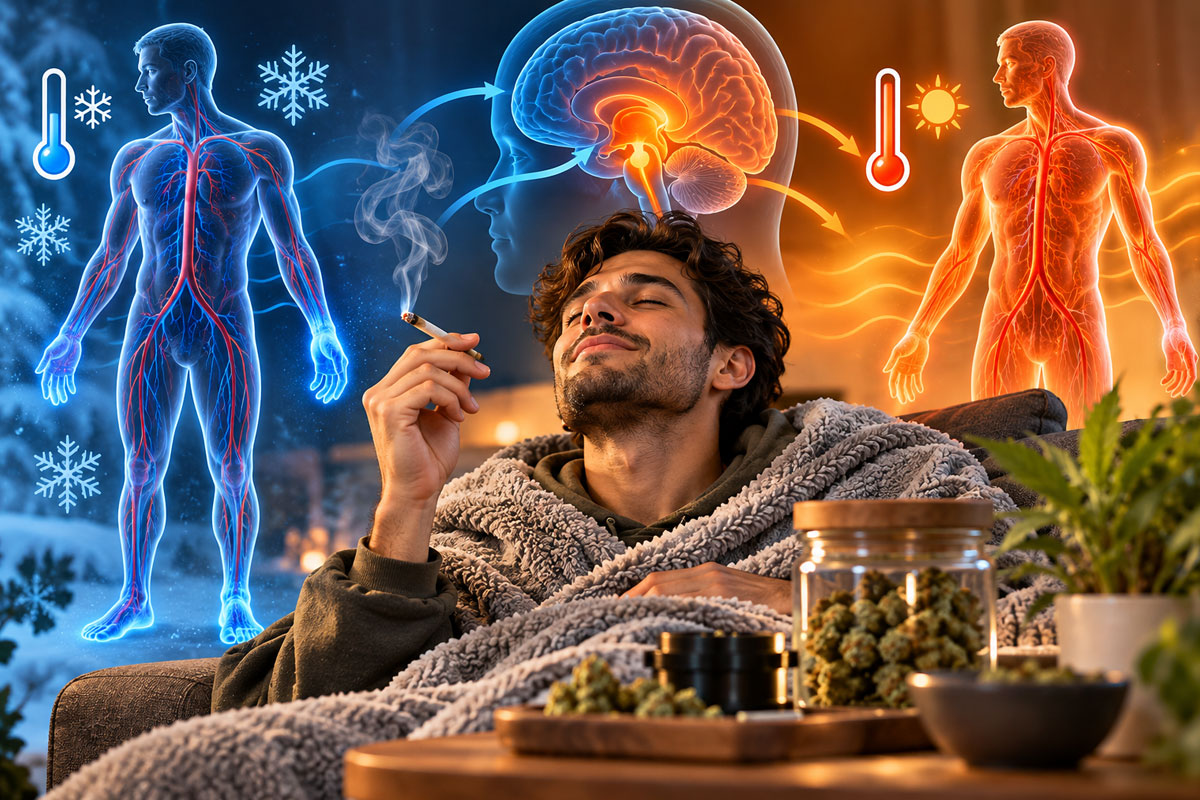
THC interacts with CB1 receptors, potentially influencing brain regions involved in temperature regulation, including the hypothalamus.
The hypothalamus helps coordinate processes such as sweating, shivering, and changes in blood circulation.
Although THC-induced decreases in body temperature have been demonstrated in animal research, the extent and consistency of this effect in humans remain uncertain.
Changes in Blood Circulation
Cannabis can also influence cardiovascular function.
THC may cause blood vessels to dilate, contributing to temporary changes in blood pressure and circulation.
These changes can affect sensations of warmth or coolness, particularly in the hands and feet.
However, vasodilation does not automatically mean that cannabis lowers core body temperature.
Why Do You Feel Cold After Smoking Weed?
Several factors may explain why someone experiences chills or unusual temperature sensations after cannabis consumption.
1. THC and Temperature Perception
THC affects the central nervous system and can alter sensory perception.
This means a person may become more aware of sensations they would normally overlook, including changes in air temperature or skin sensitivity.
Consequently, a mildly cool environment might feel noticeably colder after consuming cannabis.
2. Changes in Blood Pressure
Cannabis can temporarily lower blood pressure, particularly when someone stands up quickly.
This response, known as orthostatic hypotension, may cause dizziness, weakness, or lightheadedness.
Some individuals may also describe feeling clammy or cold.
Anyone experiencing these symptoms should sit or lie down somewhere safe until they improve.
3. Anxiety and Stress Responses
Although some cannabis consumers report relaxation, THC can also produce anxiety, especially at higher doses.
Anxiety may trigger physical responses such as trembling, sweating, rapid heartbeat, or chills.
These symptoms can sometimes be mistaken for changes in body temperature.
4. Environmental Conditions
The surrounding environment also matters.
Someone sitting outside during cold weather may notice the temperature more intensely after consuming cannabis.
Clothing, hydration, food intake, and general physical condition can all influence temperature comfort.
Can Weed Lower Your Body Temperature?
One of the most interesting questions surrounding cannabis is whether it can actually reduce internal body temperature.
Research has demonstrated that THC can produce hypothermic effects in certain animal models.
However, results from animal experiments cannot be directly applied to everyday human cannabis consumption.
Human responses depend on factors such as THC exposure, tolerance, metabolism, and environmental conditions.
Therefore, while cannabis may influence thermoregulation, there is insufficient evidence to conclude that ordinary cannabis use consistently lowers core body temperature in humans.
It’s also important to distinguish between feeling cold and having hypothermia.
Hypothermia is a medical emergency involving dangerously low core body temperature. Severe confusion, extreme drowsiness, or a measured temperature below 35°C requires urgent medical attention.
Does Indica or Sativa Make You Feel Colder?
Cannabis products are frequently categorized as indica, sativa, or hybrid.
These labels are commonly associated with different consumer experiences, but they are not reliable predictors of how a product affects body temperature.
For example, indica products are often marketed as relaxing, while sativa products are commonly described as energizing.
However, the actual effects depend more on cannabinoid content, terpene composition, dose, and individual physiology than on these broad labels.
There is currently insufficient scientific evidence showing that indica strains consistently make people colder than sativa strains.
Consumers interested in understanding a product’s potential effects should pay attention to verified cannabinoid concentrations rather than relying entirely on strain categories.
Potential Benefits of Cannabis and Temperature-Related Effects
Although feeling cold is not generally considered a cannabis benefit, research into cannabinoids has identified several areas of potential therapeutic interest.
Relaxation and Stress Management
Some individuals report that cannabis helps them unwind and temporarily feel more relaxed.
However, responses vary considerably, and high-THC products can increase anxiety or produce uncomfortable physical sensations.
Cannabis should not be considered a guaranteed treatment for stress or anxiety.
Pain Management Research
Cannabinoids have been studied for their potential role in managing certain types of chronic pain.
Some evidence suggests that particular cannabinoid-based medicines may provide modest relief for selected patients.
Nevertheless, benefits must be weighed against possible side effects, including dizziness, cognitive impairment, and dependence.
Understanding the Body’s Regulatory Systems
Cannabinoid research has helped scientists better understand the endocannabinoid system and its involvement in processes such as appetite, pain perception, mood, and temperature regulation.
This scientific knowledge may contribute to future therapeutic developments.
However, the possibility that THC affects thermoregulation does not establish cooling the body as a proven health benefit.
How to Stay Comfortable If Weed Makes You Feel Cold
If cannabis makes you feel unusually chilly, several simple precautions may help improve comfort.
- Move somewhere warm: Choose a comfortable indoor environment and avoid prolonged exposure to cold weather.
- Wear additional layers: A sweater or blanket may help with mild temperature discomfort.
- Stay hydrated: Drink water regularly, especially if you are experiencing dry mouth.
- Avoid additional THC: Consuming more cannabis may intensify unwanted effects.
- Monitor symptoms: Pay attention to dizziness, severe shivering, confusion, or persistent discomfort.
If symptoms are severe, unusual, or do not improve, seek medical advice.
People who experience repeated uncomfortable reactions may benefit from avoiding cannabis and discussing their symptoms with a healthcare professional.

Does Weed Make You Cold or Hot?
Interestingly, cannabis users sometimes report opposite temperature sensations.
Some feel cold, while others experience warmth, flushing, or sweating.
This variation may reflect differences in circulation, sensory processing, anxiety responses, and environmental conditions.
For instance, THC-related blood vessel dilation may contribute to facial flushing, while heightened sensory awareness may make cool air feel more noticeable.
These effects demonstrate why cannabis experiences are highly individual.
Rather than assuming that every temperature sensation is caused directly by THC, consumers should consider other possible explanations, including illness, dehydration, medication interactions, and environmental exposure.
Final Thoughts: Does Weed Make You Cold?
So, does weed make you cold? Cannabis can cause some individuals to experience chills, cold hands, or increased sensitivity to cooler temperatures. THC may influence temperature regulation and circulation, although evidence that cannabis consistently lowers human core body temperature remains limited.
Understanding these reactions can help consumers recognize their body’s responses and distinguish ordinary discomfort from symptoms requiring medical attention.
Cannabis also continues to attract scientific interest for its potential therapeutic applications, particularly in pain management and other areas of cannabinoid research. However, individual responses and safety considerations remain important.
For adults interested in exploring quality cannabis products, West Coast Cannabis is an online dispensary they may encounter while researching available options. Before purchasing, consumers should verify that any retailer is legally authorized in their province, review available product testing information, and prioritize clearly labeled cannabinoid concentrations.
Ultimately, responsible cannabis decisions begin with understanding the potential effects, recognizing personal limits, and choosing products from legally authorized, transparent sources.